
Trainings Headling


Learn how to safely operationalize AI coding agents in regulated industries with platform-level governance, secure workspaces, and scalable agent infrastructure
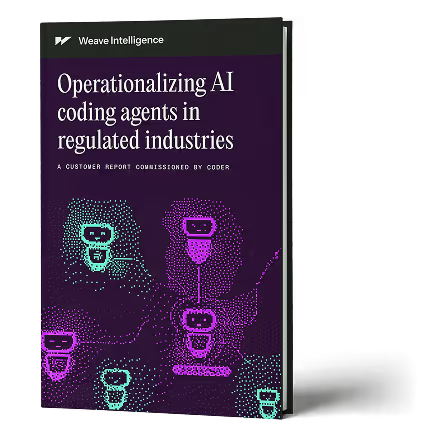


What's inside the report?
AI coding agents are changing how software gets built - but in regulated industries, they introduce new risks that traditional governance models can’t handle. This whitepaper explains how platform engineering teams in finance and government can safely operationalize AI agents using controlled environments, deterministic guardrails, and scalable governance frameworks.
Key takeaways:
• The shift from assistants to autonomous agents: how development evolves from human-in-the-loop coding to agent-driven workflows
• How to operationalize agents with platform engineering: moving development into governed, cloud-hosted or air-gapped workspaces where policies, identity, and execution are centrally controlled
• A practical implementation path for platform teams: starting with observability, adding structured context, and scaling agents through ephemeral, policy-controlled workspaces