

PlatformCon 2026 has wrapped, and it did not go quietly. What started in 2022 as a modest, virtual-only gathering of 6,000 platform engineers has become the connective tissue for a discipline that just spent a week arguing about its own future.
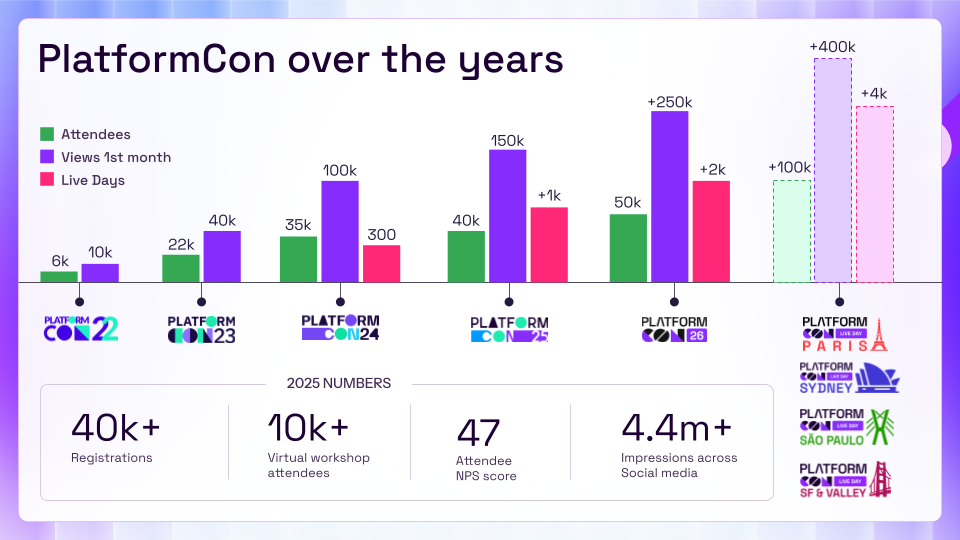
Over five days, we published more than 250 virtual talks and ran 64 hands-on workshops, then poured that energy into two flagship Live Days, with 1,000 engineers on the ground at London Live Day, and 700 more at NYC Live Day. The virtual kickoff opened the week on June 22, London followed on June 23, New York on June 25, and the closing panel spent its final minutes trying, mostly unsuccessfully, to sum up everything that had just happened. Here is what actually mattered.
The community keeps compounding, and PlatformCon Live Days are going global
PlatformCon does not stay put anymore. The world tour continues later this year with stops in Paris on September 24, Sydney on October 28, and São Paulo on November 7, before the format takes its biggest swing yet. San Francisco in February 2027, home to AgenticCon, an entirely new event built around one specific bet, that agentic software delivery deserves a stage of its own. Whether that bet pays off, we will find out together.
For now, the growth curve makes its own argument. Four years ago, this was a virtual meetup finding its feet. Today it is a distributed, year-round program with thousands joining the virtual workshops live, tens of thousands more watching the virtual talks track on their own schedule, and a physical footprint now spanning three continents. That is not organic growth. That is a community deciding, repeatedly, that showing up, in whatever form that takes this quarter, is worth it.
Weave Intelligence turns the thesis into infrastructure
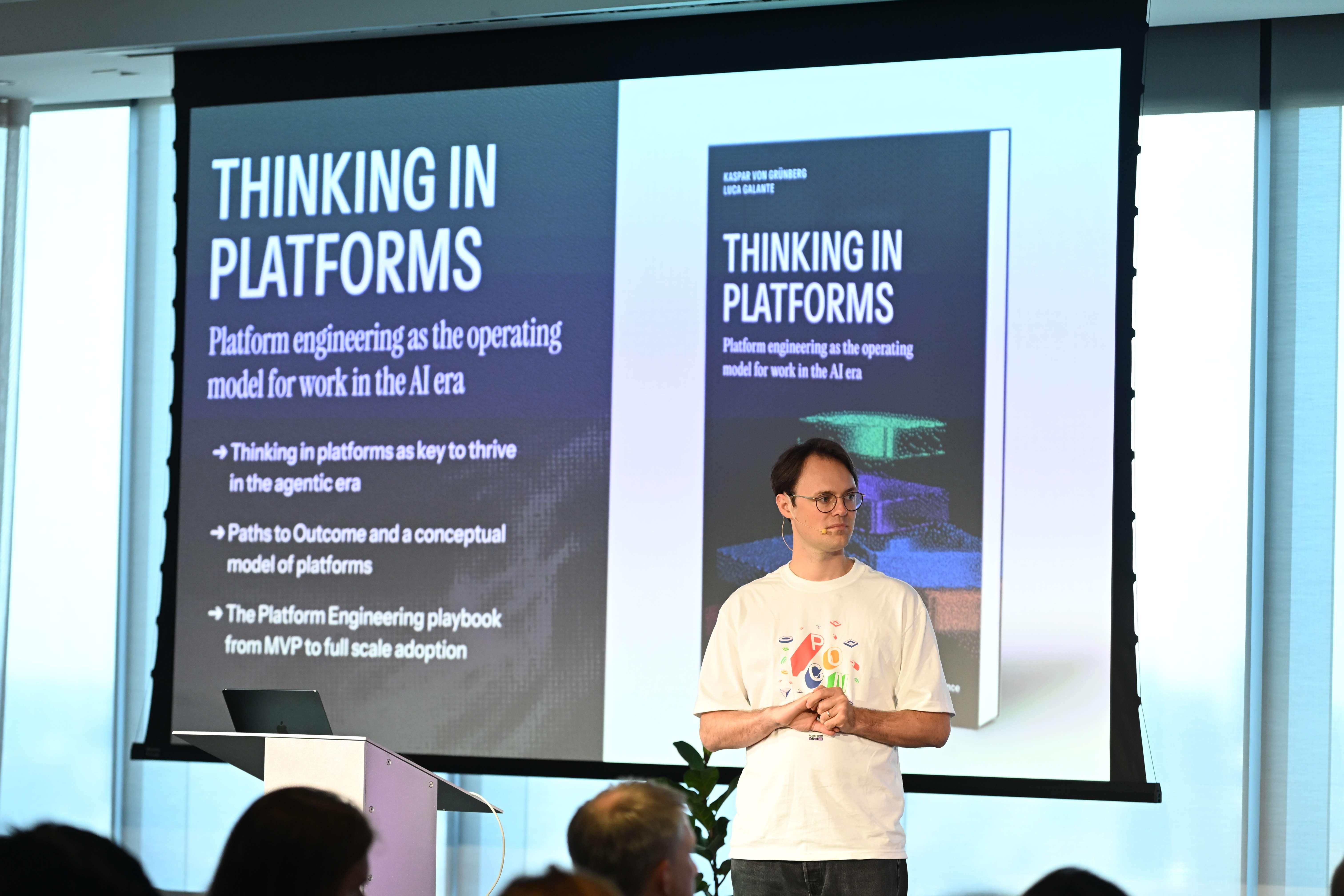
The biggest institutional shift this year did not happen on a Live Day stage. It happened with the launch of Weave Intelligence, the community's new dedicated research arm and the publisher behind Kaspar von Grünberg and Luca Galante's upcoming book, Thinking in Platforms, out August 18. PlatformCon Live Day attendees didn’t have to wait that long and already received their first copies during book-signing events in both London and New York.

Kaspar and Luca opened both London and New York Live Day with a joint keynote that set the thesis for the entire week. There is no usage of AI in the enterprise at scale without platform engineering. It is a bold claim, but five days of talks, workshops, and case studies did not do much to disprove it.

Weave Intelligence backed that thesis with something more useful than a slogan by presenting a reference architecture for the Agentic Development Platform (ADP), published straight to the stage. The ADP is not a rip-and-replace of your IDP, it is what the IDP turns into once agents stop being tools developers reach for and start acting as part of the developer population themselves. Get that transition right, and the platform multiplies throughput. Get it wrong, and it multiplies whatever chaos was already there.
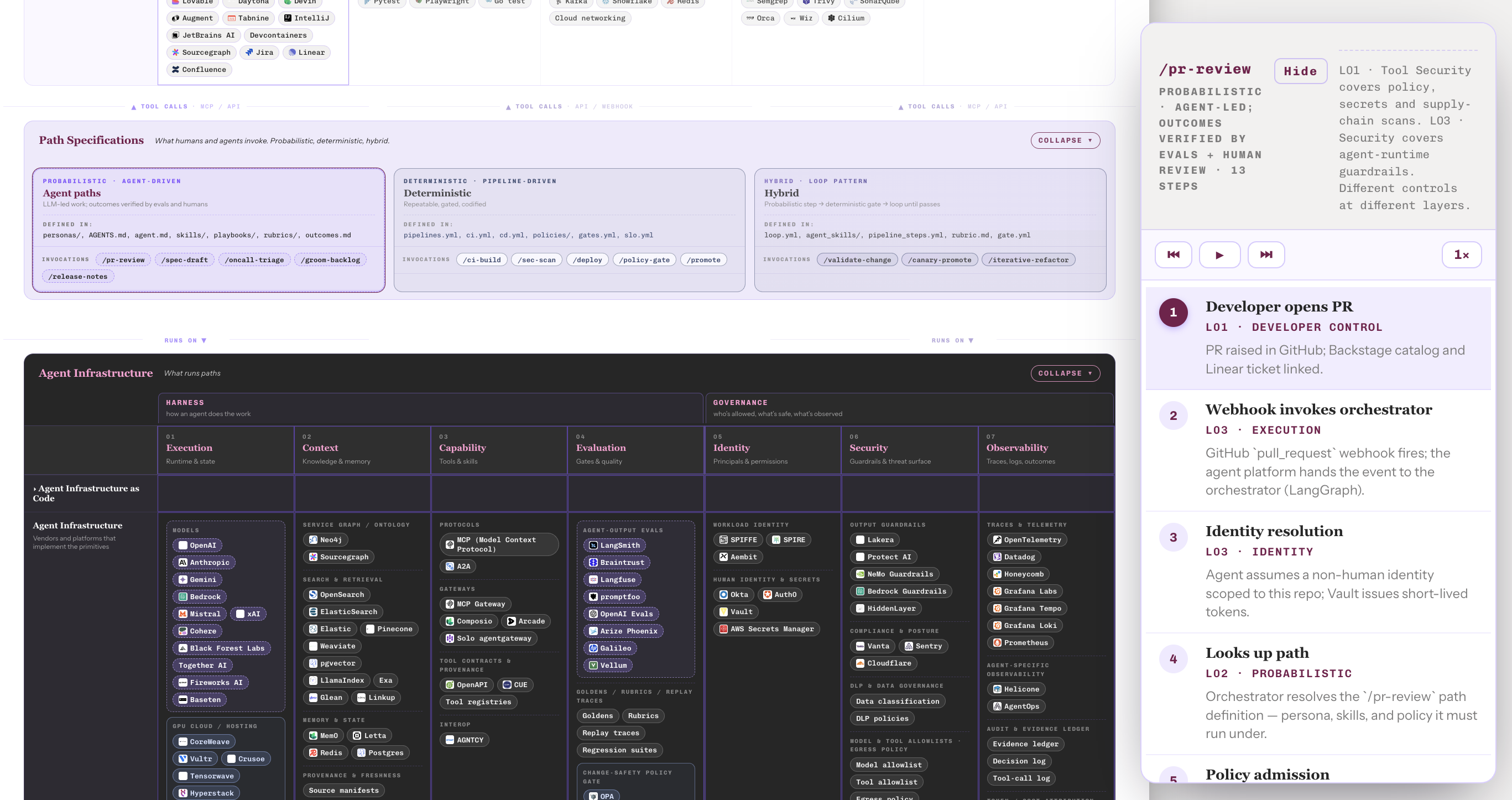
Platform Engineering University moved fast to support the framework through its curriculum. Registration is open now for two new courses, Agent Infrastructure for Platform Engineers and Agentic Development Platforms, both landing by early autumn. If ADP is the theory, these are the first attempt at turning it into a skill you can actually hire for.
The virtual program did not just support the main stage
You never want to mistake the virtual track as a sideshow. And this year that was truer than ever. Ajay Chankramath and Kaspar von Grünberg's Architecting Agentic Development Platforms put technical flesh on the ADP announcement, while Dilek Altin's talk on agent infrastructure covered the GPU, gateway, and guardrail plumbing that ADPs actually need to run on.
Mallory Haigh used her session to introduce the four levels of agentic development, a maturity ladder for how much autonomy an agent should be trusted with at each stage, and one we expect to see referenced constantly over the next year. Annie Hodgkins from Gartner made the case for storytelling as a platform value tool, and Eleanor Millman closed the track by asking what changes when your platform users are not developers at all, a question that is only going to get louder as citizen developers keep showing up on internal platforms.
Context as code, and learning to run before you read
London Live Day, with a keynote from Gregor Hohpe, was where the technical rethink of the software lifecycle got the most concrete. He also re-emphasized what we already heard earlier from Kaspar and Luca in their keynote:
“GenAI does not make your problems go away. It amplifies your dysfunctions.”

Patrick Debois used his talk, Context is the new code, to argue that the context prompts steering AI coding agents need to become formal enterprise assets, versioned, reviewed, and governed with the same rigor as infrastructure as code.
Kief Morris picked up the same thread from a different angle in his talk about Humans on the loop. His core argument was simple. If you want an agent to behave differently, change the harness, the context, the guides, the sensors shaping what it does, not the output it just produced. Wire the CD pipeline into that loop and it does the rest, surfacing how the software actually breaks and routing the failure back to the agent to retry against updated context. The platform has not removed humans from review, it has changed what they are reviewing. Outcomes, not diffs.
In New York, Justin Reock from DX discussed the leadership’s accountability for best practices, measuring impact, and ensuring proper guardrails before rolling out AI at scale.
The cognitive load did not disappear, it just changed owners
Not every session was building toward a friction-free future. Kasper Borg Nissen of Dash0 used his session to point out an uncomfortable pattern. Platform engineering spent years successfully driving cognitive load down, but now unmanaged AI tool sprawl is putting it right back up.

Booking.com's case study on rolling AI tools out to 3,000 developers backed that up with real numbers, and it resonated precisely because it was honest about what is still unresolved, particularly integrating AI consistently across the software development lifecycle.

New York Live Day sharpened the critique further. Kelsey Hightower's talk took aim at the economics of running agents nobody fully understands, burning cloud tokens on autonomous work with no clear return.

He went further, warning about a quieter cost - unskilling. There is a risk that infrastructure and architecture lessons that a generation of engineers learned the hard way may simply not be learned by today's juniors anymore (if they even find a job).
Security broke, and policy-as-code is the rebuild
Security ran as a theme across both cities. London asked the question directly in its panel, Can your platform survive AI?, and New York answered it twice over with The vulnerability apocalypse: AI broke the security playbook and Securing the platform: hard-won lessons from the teams who've been breached, scaled, and survived. The consensus across all three was that manual review and reactive patching cannot keep pace with machine-speed coding, full stop.

Ajay Chankramath and Mallory Haigh brought that back to NYC Live Day with a session applying the ADP and four-levels frameworks to a room full of security-minded platform leads. Caroline Wong walked through the security frameworks required to make that autonomy safe, and Jay Moran took the discussion to production scale with an architectural deep-dive into the Fiserv enterprise platform.
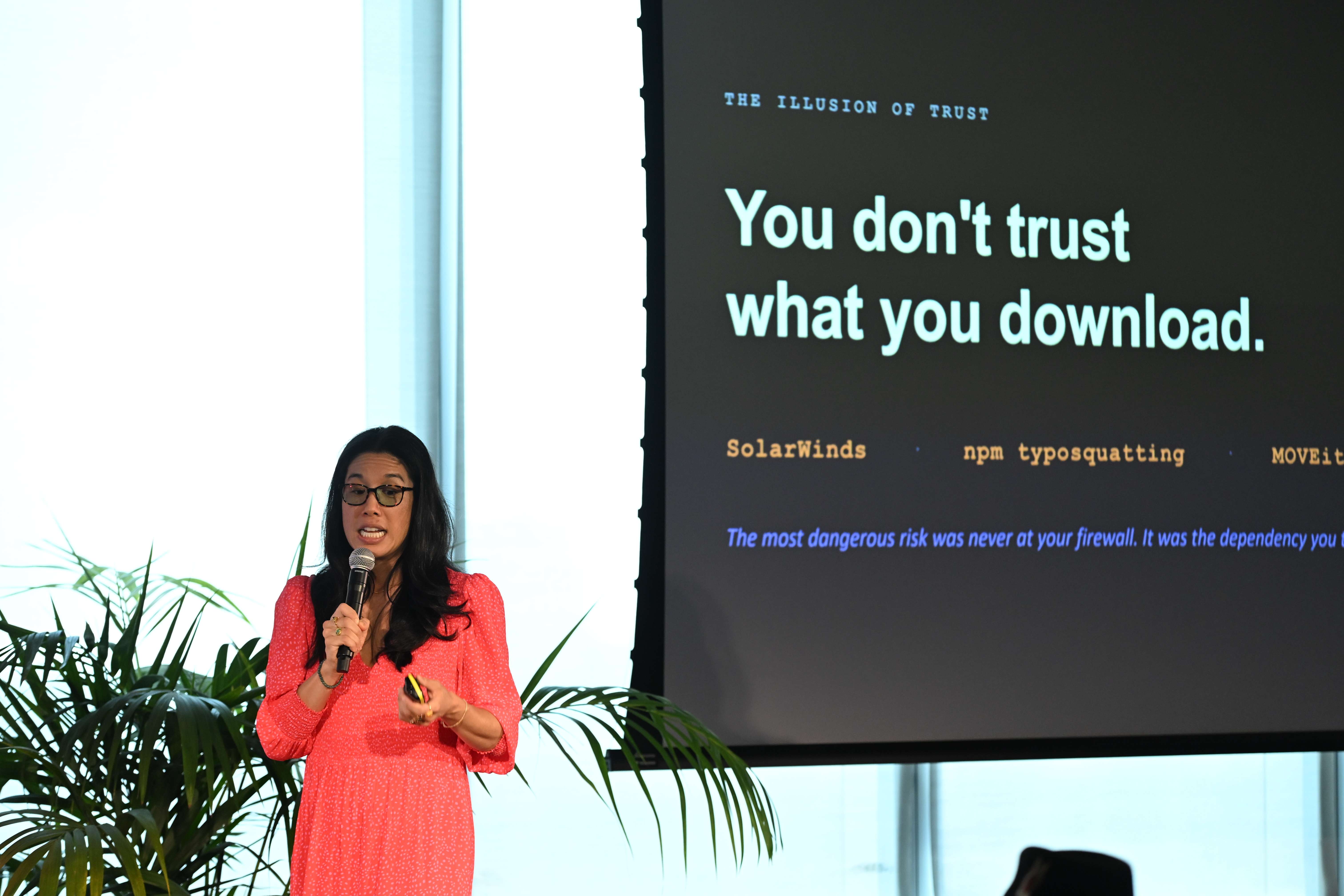
Put together, this is the discipline finally executing on something we flagged at PlatformCon 2025; the shift from shift-left to shift down and security and reliability embedded directly into the platform substrate instead of bolted on afterward. This year gave that instinct a name, policy-as-code, and a handful of enterprises willing to show their work.
When platform engineering pays off as democratization
Get the guardrails right, and the platform stops being a bottleneck and starts being a multiplier. Boyan Dimitrov's talk, When everyone can build, was one of the clearest proofs of that on offer this year: SIXT's CTO walked through how the platform team there empowered non-technical, citizen developers to build and ship over 1,000 internal applications without compromising security or stability.

That is the democratization argument platform engineering has been making since Team Topologies popularized platform as a product, now running at production scale with AI in the mix. It also answers Eleanor Millman's question from the virtual track about what happens when your platform users are not developers. They are enabled to ship safely, because the platform was built to carry all the weight. It is the strongest answer we have heard yet to anyone still asking whether platform engineering has a role once AI can write code.
Catch up on everything you missed
The week closed, appropriately, with a live debate rather than a victory lap. The closing panel wrapped up the event and immediately started arguing about what to build next, which is the right note to end on. Every talk, workshop, and keynote from the week is already live on the PlatformCon program page, so there is no excuse for missing the sessions you could not catch live.
For a better overview, also check out our learning paths on YouTube, where we have grouped talks according to these themes:
Infrastructure for agents and LLMs
AI-powered platform operations
Platform strategy & product thinking
Security, compliance and supply chain
The bigger takeaway holds regardless of which sessions you get to first. Platform engineering just became more central to enterprise survival, not less, and the AI era is the reason why. Paris, Sydney, São Paulo, and AgenticCon in San Francisco are the next chances to keep that argument going in person, and Platform Weekly and our Slack are where the argument keeps going in between. Watch the sessions, send them to your team, and we will see you at the next stop on the tour.