Virtual
In-person
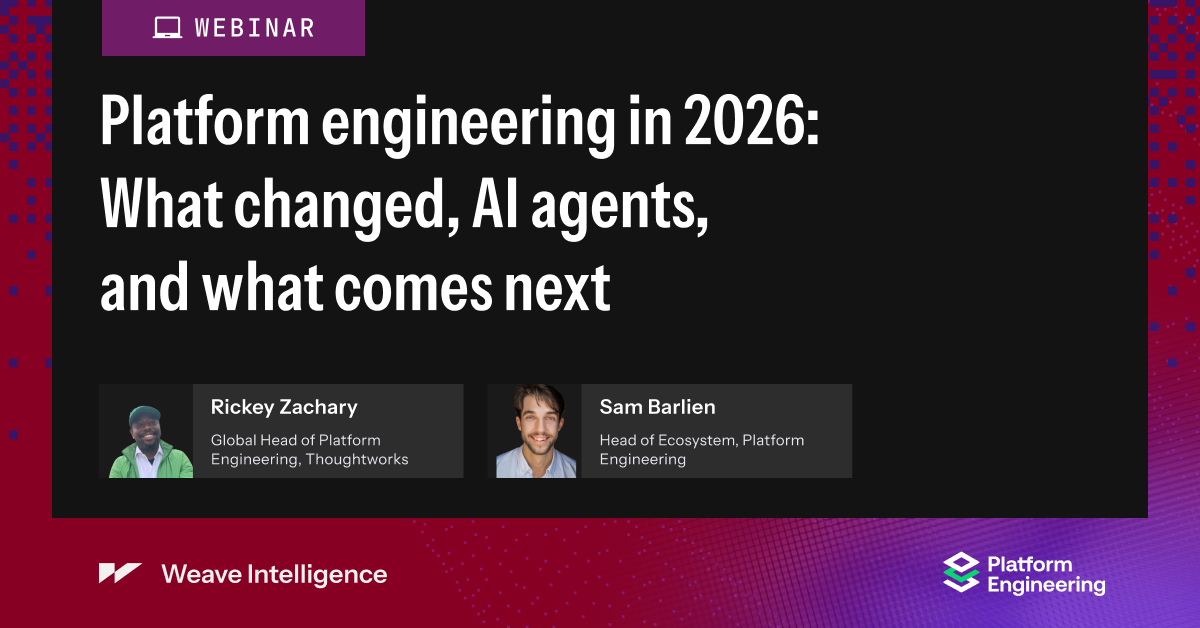
Platform engineering in 2026: What changed, AI agents, and what comes next
In 2025, nearly every platform engineer used AI, but few saw a return. In 2026 that changed. With the State of AI in Platform Engineering Volume 2, the four levels of agentic development, and the State of Platform Engineering Volume 4, the data is in. Agents now open pull requests in nearly a third of organizations, yet only 8% report a major return. We explore what happened and what to expect in 2027.


In 2025, nearly every platform engineer used AI, but few saw a return. In 2026 that changed. With the State of AI in Platform Engineering Volume 2, the four levels of agentic development, and the State of Platform Engineering Volume 4, the data is in. Agents now open pull requests in nearly a third of organizations, yet only 8% report a major return. We explore what happened and what to expect in 2027.
We break down:
- Where the industry sits on the four levels of agentic software development, and why most organizations stall once agents open pull requests that humans still review by hand
- The four blockers that stand between higher throughput and real ROI, from validation bottlenecks and token costs to agent identity
- How the internal developer platform is evolving into the agentic engineering platform and acting as the foundation of the AI software factory, and what platform teams should build first in 2027