
Platform engineering is no longer just an emerging trend or a niche discipline for elite tech companies. As we move into 2026, it has become the foundational operating system of the modern enterprise. In fact, as our latest research confirms, platform engineering is "eating the world," absorbing traditional silos like observability, security, and FinOps into a centralized, streamlined paradigm.
We are proud to present the State of Platform Engineering Report Volume 4. Based on insights from 518 engineers across the globe, this report explores how the discipline has evolved from the "cloud-native" era into the "AI-native" era.
Here is a look at the major trends defining the industry in 2025.
From "shifting left" to "shifting down"
For years, the industry mantra was "shift left", a well-intentioned philosophy that unfortunately resulted in dumping manual toil and cognitive load onto developers earlier in the lifecycle. Volume 4 highlights a critical correction to this trend: Shifting down.
Shifting down maximizes value by embedding responsibilities, controls, and guardrails directly into the platform rather than relying on developer intervention. Instead of forcing a developer to become an expert in security or infrastructure compliance, the platform enforces these policies automatically. This marks the end of the "artisan software engineer" era, where success relied on individual prowess, and the beginning of an industrialized software supply chain where the system itself ensures reliability and speed.
The AI-Native transformation and the dual mandate
The defining trend of this volume is undoubtedly Artificial Intelligence. We have officially crossed the threshold from the cloud-native era to the AI-native era. The data is overwhelming: 94% of organizations now view AI as critical to the future of platform engineering.
This has created a "dual mandate" for platform teams:
- AI-Powered platforms: Augmenting Internal Developer Platforms (IDPs) with AI agents and tools to turbocharge productivity.
- Platforms for AI: Building the specialized, GPU-accelerated infrastructure required to train, deploy, and scale AI models.
To support this, we have released a new reference architecture specifically for AI/ML Internal Developer Platforms, accounting for the unique governance and resource requirements of data scientists and MLOps.
The reality check: Measurement and budget
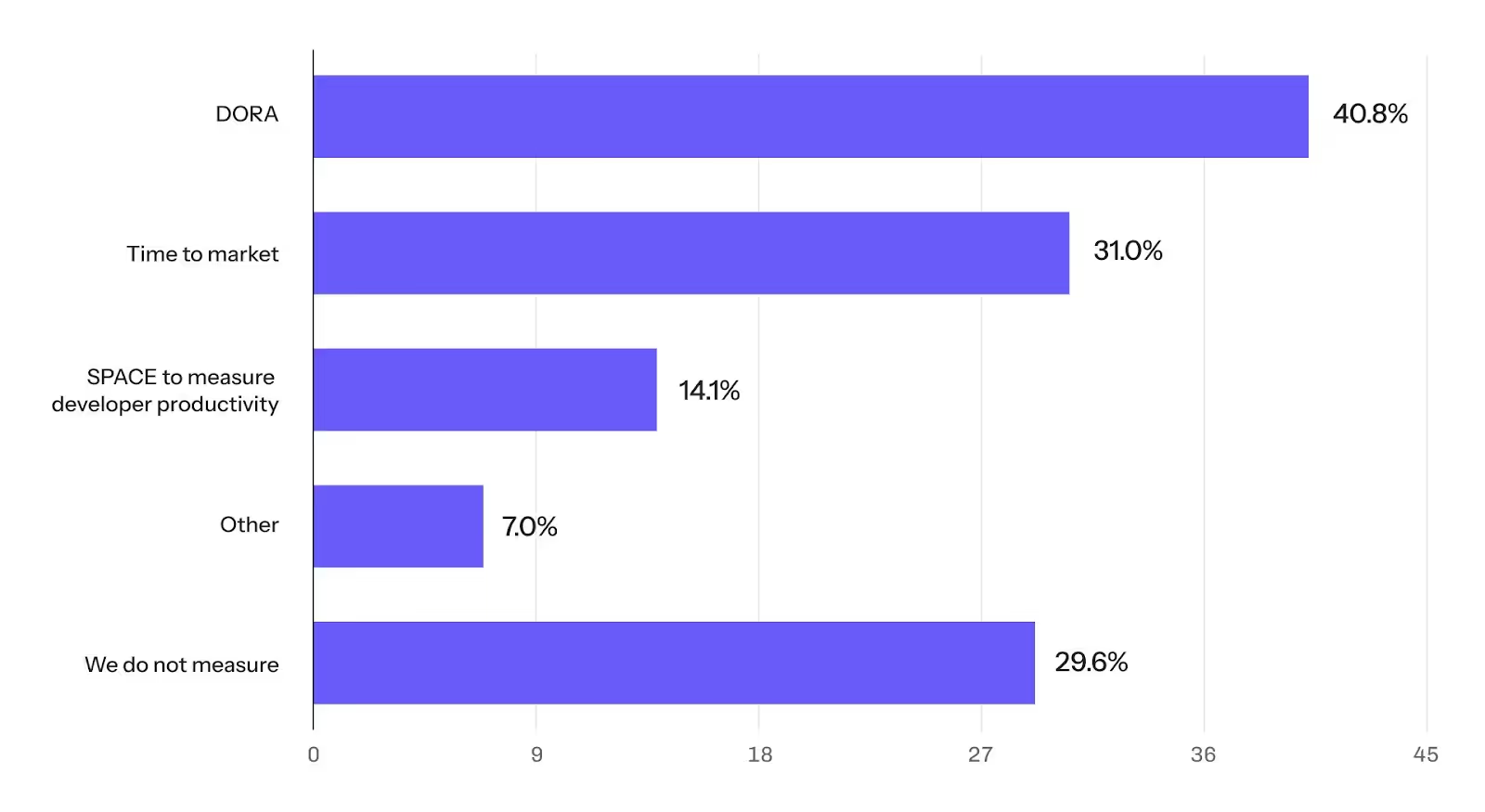
While adoption is high, the report exposes some growing pains regarding maturity and accountability. A concerning 29.6% of platform teams report that they do not measure success at all. This lack of feedback loops cripples a team's ability to prove ROI, which is dangerous in an economic climate that demands efficiency.
This lack of measurement correlates with tight resources. The survey reveals that nearly half (47.4%) of platform initiatives are operating with an annual budget between $0 and $1 million. For platform engineering to transition from a "project" to a sustainable "product," organizations must close the gap between strategic intent and financial backing.
Chart title: Which metrics to measure to prove success
The democratization of the role
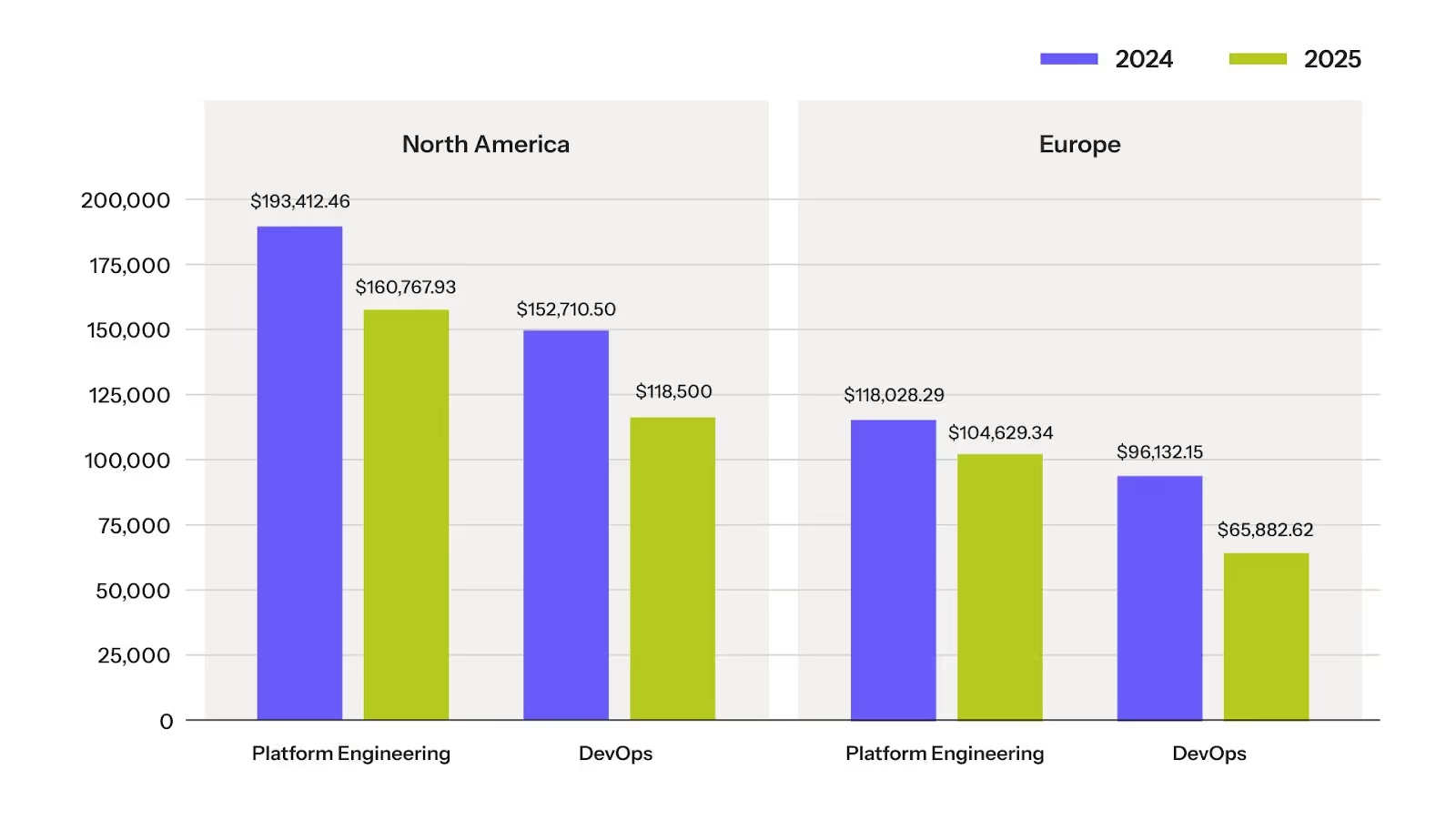
One of the most interesting findings in Volume 4 is the shift in demographics. We observed a decrease in average salaries for platform engineers in both North America and Europe compared to the previous year.
Far from being a negative signal, this indicates a healthy, maturing industry. In previous years, the role was dominated by highly senior, early-adopter specialists. Today, the discipline has gone mainstream, drawing in mid-level and junior talent. Platform engineering is democratizing, becoming a standard career path rather than an exclusive domain for the top 1% of engineers.
Chart title: Platform engineers average salary comparison: 2024 & 2025.
The end of the "single platform" myth
Finally, the data puts to rest the idea that an organization should strive for a single, monolithic platform. We found that 55.9% of companies now operate more than one platform. This plurality is not evidence of fragmentation, but of intentional design; different teams (frontend, backend, data/AI) have distinct needs that require purpose-built environments.
Looking ahead
The future belongs to organizations that treat their platform not as a static IT project, but as a dynamic product. It belongs to those who embed FinOps and observability as defaults, and who are willing to invest in the culture required to make these technical systems work.
As we look toward 2026, the choice is clear: invest in the people, culture, and AI-native foundations now, or inherit an insurmountable load of organizational debt later.
Download the full State of Platform Engineering Report Volume 4 to explore the updated reference architectures, full survey data, and our five key recommendations for the year ahead.